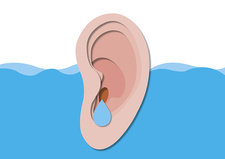
Swimmer’s ear is an infection or inflammatory condition affecting the outer ear canal between the eardrum and the outside of the ear.
What Is Actually Happening in the Body
The ear canal contains protective skin and earwax that help block infection and trap debris.
When water remains trapped inside the canal, the skin becomes softened and more vulnerable to injury.
Scratching the ear, using cotton swabs, earbuds, or inserting objects into the ear may create tiny breaks in the skin.
Bacteria or fungi can then enter these damaged areas and begin multiplying.
As the immune system responds, inflammation causes swelling, redness, pain, and drainage.
Because the ear canal is a narrow enclosed space, even mild swelling can create significant pressure and discomfort.
Severe swelling may partially block the ear canal and temporarily reduce hearing.
If untreated, infection may spread into surrounding tissue and become more serious.
What This Usually Looks Like
Swimmer’s ear commonly causes ear pain that worsens when the outer ear is touched, pulled, or moved.
The ear canal may feel itchy early on before pain becomes more severe.
Swelling, redness, drainage, muffled hearing, or a feeling of fullness in the ear may develop.
Pain may worsen while chewing or lying on the affected side.
Some individuals notice fluid draining from the ear that appears clear, yellow, or pus-like.
More severe infections may cause swelling around the outer ear or tenderness near the jaw.
What People Commonly Misinterpret
Many people assume all ear pain comes from middle ear infections, but swimmer’s ear primarily affects the outer canal.
Pain triggered by touching the ear is more typical of swimmer’s ear than middle ear infection.
Another misconception is believing aggressive cleaning helps prevent infection. Over-cleaning often removes protective earwax and damages the skin barrier.
People also commonly confuse trapped water sensation with wax buildup when infection may actually be developing.
Ignoring persistent itching may allow inflammation and infection to worsen over time.
How This Progresses
Mild irritation may initially cause itching and discomfort.
As infection develops, swelling and pain often increase rapidly.
The ear canal may narrow from inflammation, trapping more moisture and worsening the infection cycle.
Untreated infections may spread into surrounding tissue and occasionally into deeper structures around the ear.
In individuals with diabetes or weakened immune systems, severe infection can spread into nearby bone and soft tissue, creating dangerous complications.
Repeated infections may lead to chronic irritation and narrowing of the ear canal over time.
Risk Factors or Common Triggers
Swimming and repeated water exposure are common triggers.
Humidity and sweating may also trap moisture in the ear canal.
Cotton swabs, fingernails, earbuds, hearing aids, and ear scratching commonly damage the protective skin lining.
Eczema, psoriasis, and other skin conditions affecting the ear increase susceptibility.
Diabetes and immune suppression raise the risk of severe infection.
Frequent use of contaminated water sources may also increase exposure to infectious organisms.
When This Becomes More Serious
Swimmer’s ear becomes more concerning when swelling, fever, drainage, or severe pain develop.
Pain spreading into the jaw, neck, or side of the face may suggest worsening infection.
Severe swelling may completely block the ear canal and impair hearing.
Redness or swelling extending beyond the ear may indicate spreading infection.
Individuals with diabetes or weakened immune systems face increased risk for aggressive infections involving deeper tissue and bone.
Symptoms worsening despite treatment require reassessment.
When to Monitor vs When to Be Seen
Mild irritation after swimming may improve if the ear remains dry and protected.
Medical evaluation is appropriate for persistent ear pain, drainage, hearing changes, swelling, or symptoms lasting more than a short time.
Evaluation may include examination of the ear canal and assessment for bacterial or fungal infection.
Individuals with diabetes, immune compromise, or recurrent ear infections should seek evaluation earlier.
Persistent or worsening symptoms should not simply be ignored.
When to Go to the Emergency Room
Emergency care is necessary for severe swelling, high fever, facial weakness, severe spreading pain, or rapidly worsening infection.
Confusion, severe headache, or swelling extending into the face or neck requires urgent evaluation.
Individuals with diabetes who develop severe ear pain or swelling should seek immediate medical attention because invasive infection can become dangerous quickly.
Any rapidly progressive ear infection symptoms should receive emergency evaluation.